Internal Integrity & Defect Screening
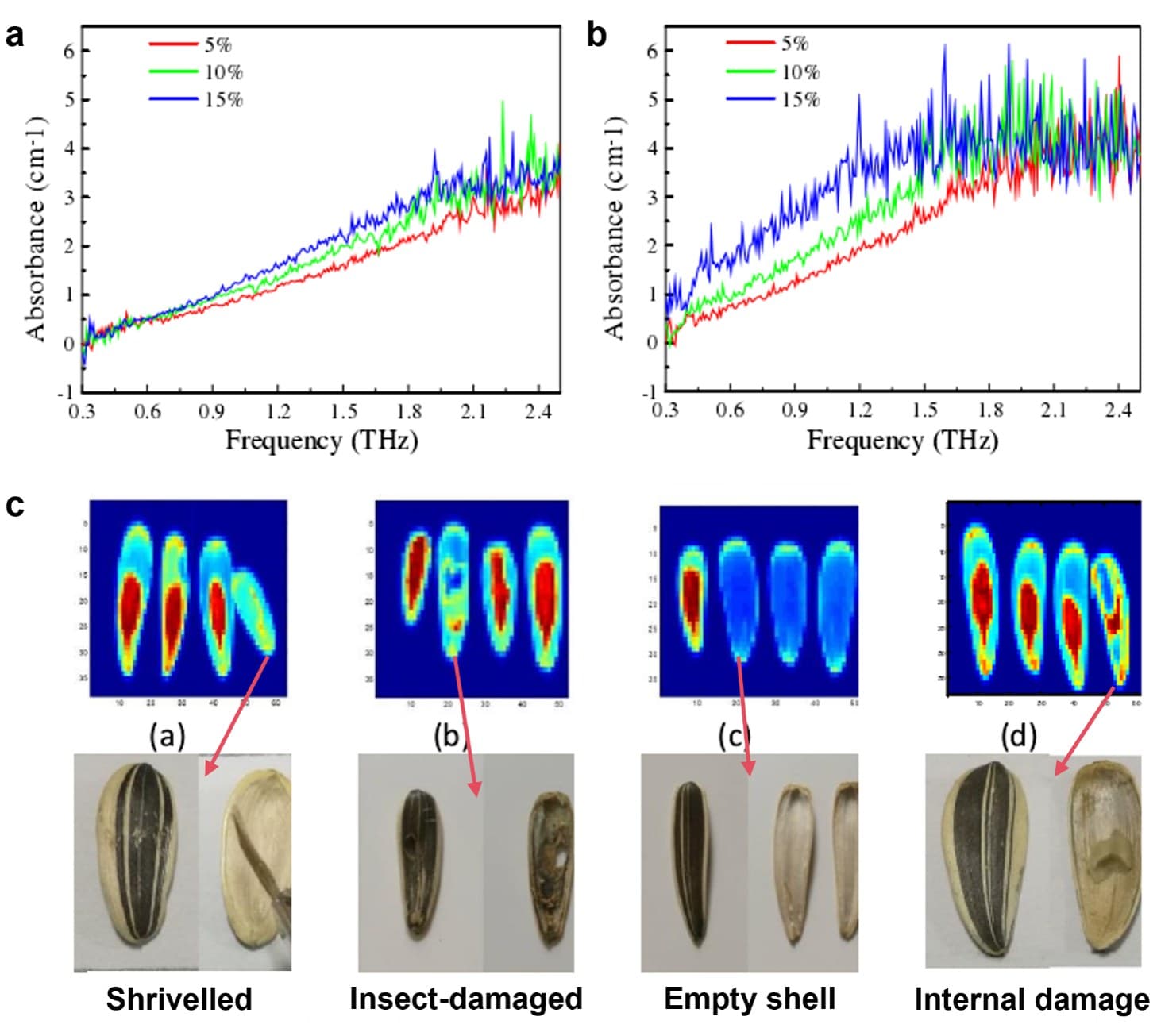
Identify internal structural abnormalities such as cracks, voids, tissue loss, insect damage, empty shells and other concealed defects.
Non-destructive multimodal seed quality assessment for internal integrity, moisture-related condition and automated grading.
Discuss a Site Trial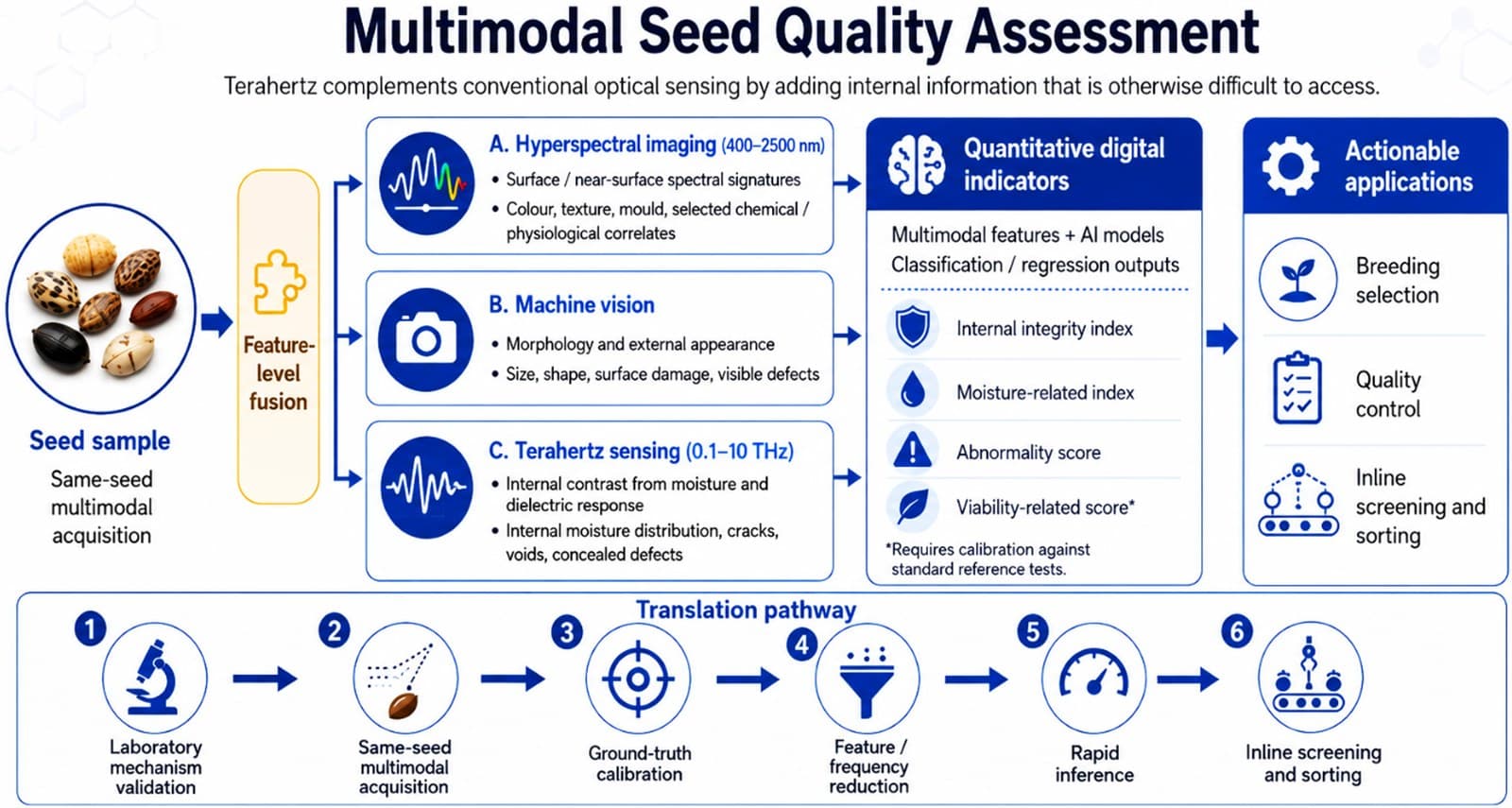
Identify internal structural abnormalities such as cracks, voids, tissue loss, insect damage, empty shells and other concealed defects.
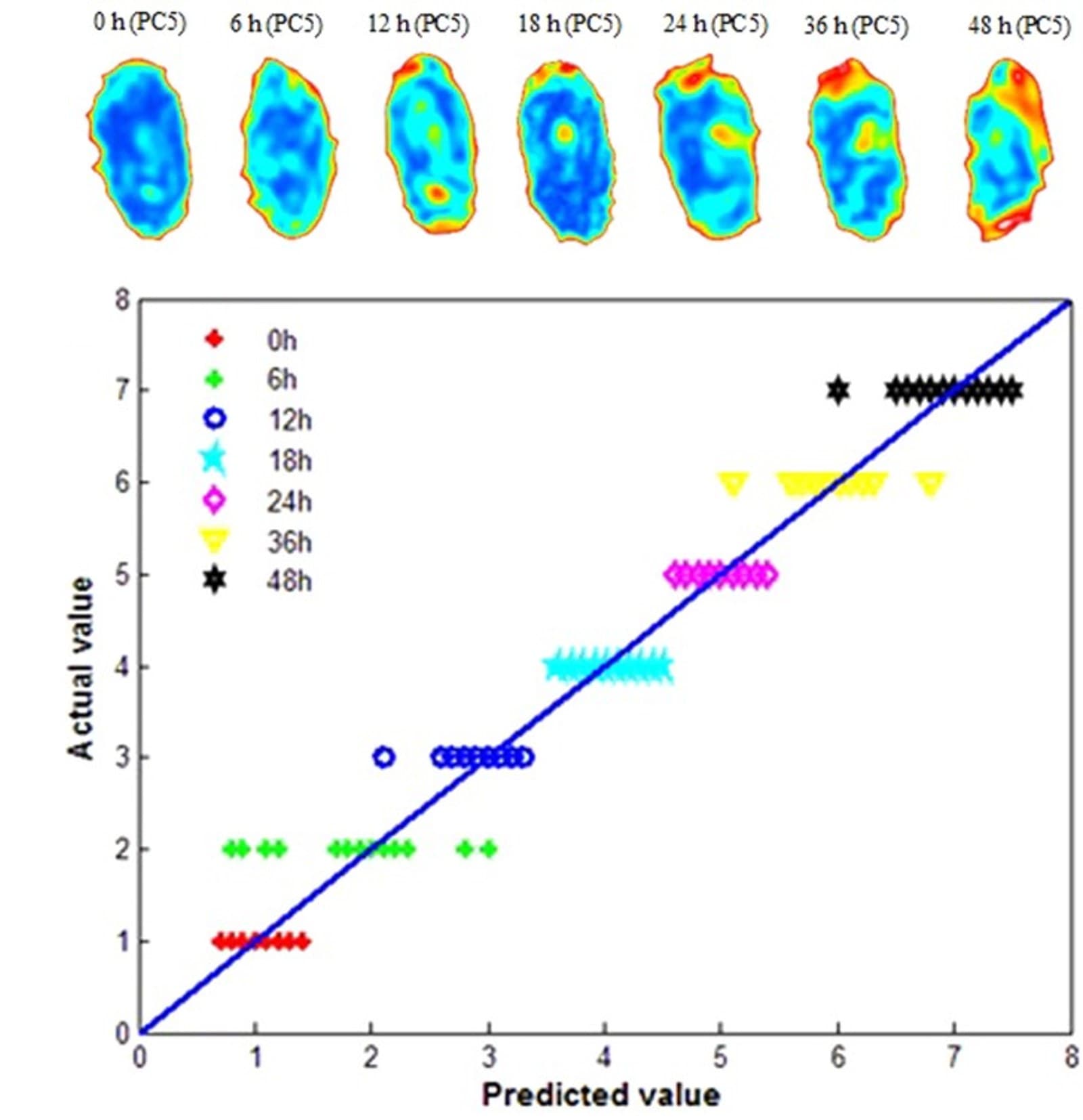
Assess moisture-related and dielectric differences within individual seeds to support quality indicators associated with storage condition, deterioration and viability-related status.
Combine spectral, imaging and morphological information to support seed classification, admixture screening and quality grading.
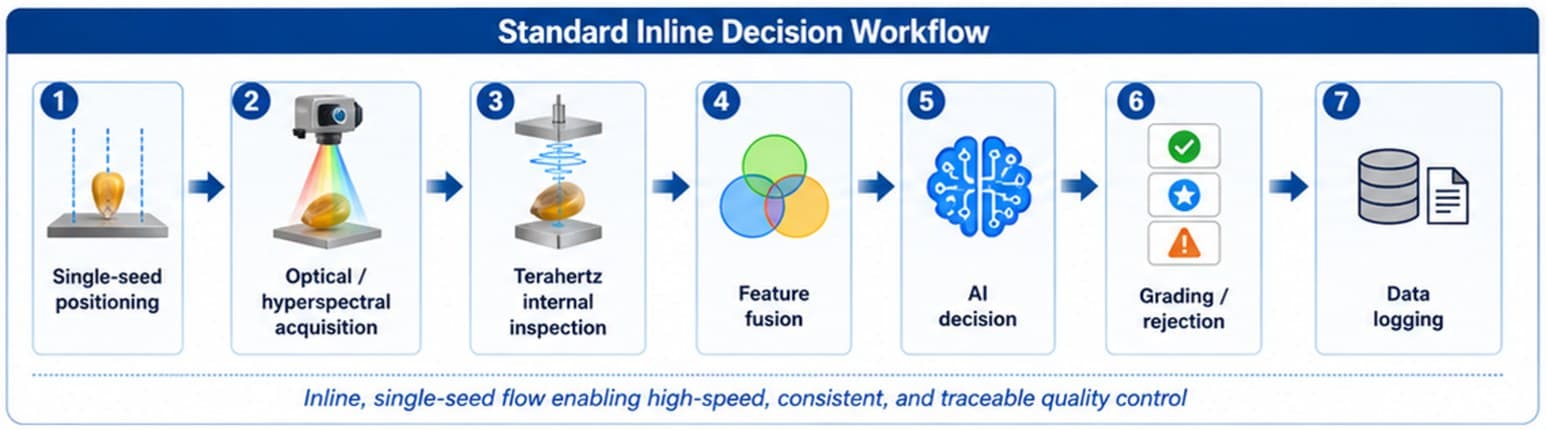
Inline, single-seed flow: positioning, optical / hyperspectral acquisition, terahertz internal inspection, feature fusion, AI decision, grading / rejection and data logging.
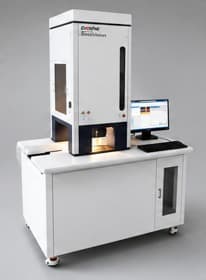
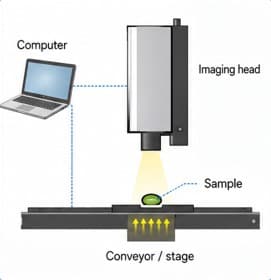
THz + Hyperspectral / Vision · Laboratory / Inline · AI-Assisted Analysis
Complementary sensing methods and deployment platforms are selected to suit the inspection task.
| Capability | Configuration & Purpose |
|---|---|
| Terahertz — THz | THz spectroscopy and imaging provide non-destructive sensitivity to internal moisture distribution, dielectric response, cracks, voids, tissue loss and concealed structural abnormalities. |
| Hyperspectral Imaging | Captures surface and near-surface spectral information associated with colour, texture, selected chemical or physiological correlates and visible or near-surface abnormalities. |
| Optical | Provides rapid assessment of seed morphology, size, shape, colour, surface damage and other externally visible features. |
| AI-Based Multimodal Fusion | Combines THz, hyperspectral, vision and reference-test data to generate classification, regression and anomaly-detection outputs. Converts multiple sensor signals into practical quality indicators rather than present raw spectra alone. |
| High-Throughput Scalable Platform | THz/hyperspectral arrays, high-speed imaging and edge inference can be developed where full-batch coverage and higher throughput are required, subject to crop- and line-specific validation. |
Broadband THz-TDS and imaging with same-seed or matched-batch reference testing. Objective: confirm signal origin, repeatability and genuine association with target quality attributes.
Frequency selection, feature engineering and model simplification. Objective: remove redundant information and validate robustness across seed lots and cultivars.
Selected-frequency sensing, line scanning or array-based detection, and real-time algorithms. Objective: enable second-scale or continuous inspection.
Conveying, positioning, detection, decision, and rejection / grading. Objective: deliver a maintainable, calibratable, production-ready inspection system.
Stages 1–2 run on the laboratory precision platform (model development); stages 3–4 on the inline production platform (industrial deployment). Modular and scalable: standardised interfaces, plug-and-play modules, remote diagnostics, continuous improvement.
Deliverables are defined around the selected seed type, quality objective and processing workflow.
Decision-oriented outputs can include an Internal Integrity Index, Moisture-Related Index and Abnormality Score.
Support viability-related, germination-stage or broader quality scores.
For inline applications, multimodal data can be translated into operational outputs such as Pass / Reject, quality grade, defect category or targeted reinspection.
Application-specific systems can integrate conveyor handling and sorting mechanisms around agreed crop type, seed geometry, coating condition, target defect and throughput requirements.
We welcome the opportunity to discuss your seed types, quality priorities and existing laboratory or processing workflow.
Drawing on our THz seed-imaging experience and multimodal system architecture, we can develop a customised solution around the attributes that matter most to your application — including internal integrity, moisture-related condition, defect screening, quality grading, coated-seed inspection or storage monitoring.
The sensing combination, calibration strategy, seed presentation method, inspection speed, AI model and sorting interface can be adapted to suit your crop, seed size, coating condition, production-line layout and quality-assurance requirements.
Contact us to discuss your inspection priorities and explore a solution designed around your seed-processing or research environment.